

How to Check Water Tank Level Without Climbing the Roof
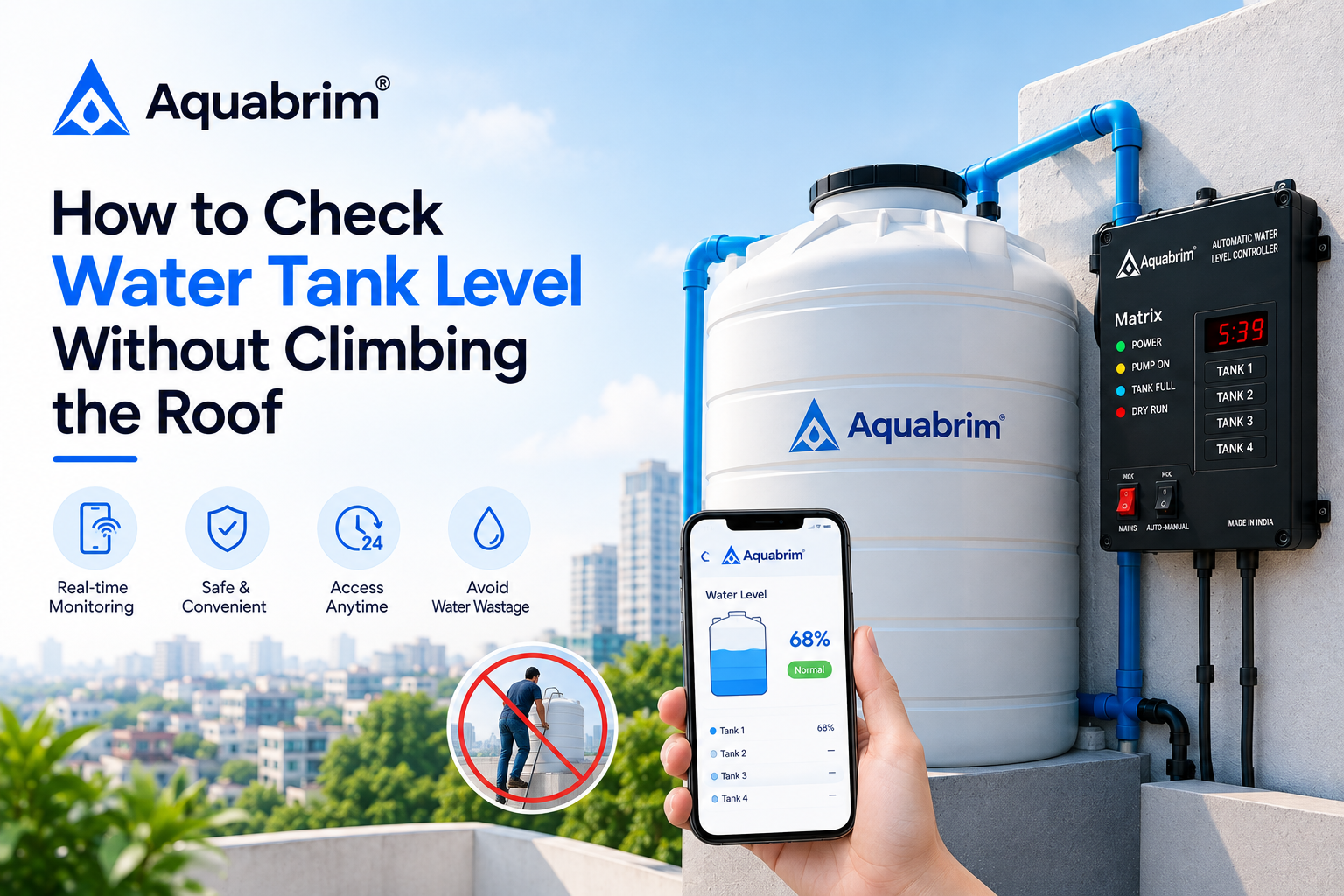
The easiest way to check your water tank level without climbing to the roof is to install a wireless water tank level indicator. A battery-powered sensor sits in the overhead tank and sends the water level to a display inside your home, with alarms for overflow and low water. Manual methods such as judging tap pressure or using a float gauge work, but they are unreliable. For complete automation, a water level controller also starts and stops the motor on its own.
If you live in an Indian home with an overhead tank, you know the routine. The tap runs dry in the middle of a bath, or water starts pouring down the wall from the terrace. Learning how to check water tank level without climbing to the roof saves you time, water and a lot of daily stress.
This guide covers every practical option, from simple manual tricks to a modern water level indicator that shows the level on a display inside your home. By the end, you will know which method suits your home, your budget and your water supply.
Why Checking Your Water Tank Level Is a Daily Problem in Indian Homes
Most Indian homes store water in an overhead tank on the terrace and pump water up from an underground sump, a borewell or the municipal supply line. The tank itself is out of sight, so nobody really knows how much water is left.
That leads to three common problems. First, the tank runs empty without warning, usually at the worst time. Second, someone forgets the motor is on and the tank overflows. Third, someone in the family has to keep climbing stairs to the roof, often several times a day.
Climbing to the roof is not just tiring. Terrace stairs can be steep and slippery during the monsoon, and in many buildings the tank is reached by a narrow iron ladder. It is not safe for elderly parents, and it is a real hassle for anyone living alone.
Overflow is an expensive mistake too. Water that spills from the tank also wastes the electricity used to pump it, and constant seepage damages terrace waterproofing and walls. If you have ever wondered how much water an overflowing tank wastes , the numbers are surprisingly large.
How to Check Water Tank Level: 5 Methods Compared
There is no single right answer for every home. Below are the five most common ways families in Delhi, Gurgaon, Noida, Mumbai and Bengaluru check their tank level, starting with the most basic.
1. The Tap Pressure Guess
Many people judge the tank level by how strongly water comes out of the tap. Strong flow means the tank is full, and weak flow means it is running low.
The problem is that pressure only drops noticeably when the tank is almost empty. By the time you notice it, there is very little water left, so this is a warning sign rather than a way to check.
2. Knocking on the Tank or Looking Through the Lid
The traditional way is to go up to the terrace, open the lid and look inside, or knock on the side of a plastic tank and listen for where the hollow sound changes.
This works, but it still means climbing to the roof every time. Opening the lid often also lets in dust, leaves and insects, which affects water hygiene.
3. A Mechanical Float Gauge
A float gauge uses a floating ball or block inside the tank connected to a pointer or marker on the outside. As the water rises and falls, the marker moves.
Float gauges are cheap, but you can only read them from close to the tank. The moving parts can also get stuck because of scale and dirt, especially in areas with hard borewell water such as parts of Gurgaon and Bengaluru.
4. A Wired Water Level Indicator
A wired water level indicator uses sensors in the tank connected by a long cable to an LED panel inside the house. The LEDs light up to show roughly how full the tank is.
This finally lets you check the level without going upstairs. However, the cable has to run from the terrace down through walls or along the outside of the building. Installation is messy, cables get damaged by sun and rain, and metal probes in the tank tend to rust over time.
5. A Wireless Water Tank Level Indicator
A wireless water tank level indicator is the most convenient option for most homes today. A battery-powered sensor sits in the tank and sends the water level by radio signal to a display unit inside your home.
There are no cables between the tank and the display, so installation is clean and quick. You can see the tank level from your living room or kitchen, and many models also sound an alarm when the tank is about to overflow or running low.
How a Wireless Water Level Indicator Works
Understanding the basics helps you choose the right product. A wireless system has two main parts: a sensor in the tank and a display or controller unit inside the house.
The wireless water level sensor measures the water height inside your overhead or underground tank. Some sensors sit in the water and measure the level directly, while a non-contact water level transmitter is mounted at the top of the tank and measures the level without touching the water.
The sensor sends its reading by radio frequency (RF) to the indoor unit. The display then shows the level, either as LED bars or as a percentage, so a quick glance tells you exactly how much water you have.
Because the sensor runs on batteries, you do not need a power point on the terrace. You simply place the sensor in the tank, insert the batteries and it starts sending data.
What to Look For in a Water Tank Level Indicator
Not every water level indicator is built for Indian conditions. Before you buy, check for these features:
- Wireless sensors, so no cables need to run from the terrace to the display
- Rust-free and scale-free sensors that work well with hard water and high-TDS borewell water
- A clear display that shows the level at a glance, ideally as a percentage
- An overflow alarm and a low-level alarm with a buzzer, so you are alerted in time
- Long battery life for the tank sensor, so you are not replacing batteries every few months
- Support for more than one tank if you have both an overhead tank and an underground sump
- Reliable wireless range that reaches through concrete floors in multi-storey buildings
- Local after-sales support and service in your city
The Aquabrim Flexibell water level indicator is built around these needs. It shows your tank level on an indoor unit and sounds an alarm before the tank overflows or runs low, so you never have to guess.
For tall buildings or homes where thick concrete weakens the radio signal, Aquabrim's Wireless Signal Booster extends the range between the sensor and the indoor unit.
How to Check Water Tank Level on Your Phone
If you travel often or want to keep an eye on your parents' home in another city, you can also check the tank level remotely. Smart systems with Wi-Fi or IoT connectivity send the tank level to a mobile app.
This means you can open your phone in a Bengaluru office and see whether the tank at home in Noida is full. You can also get alerts for overflow, low water and motor problems, wherever you are.
Remote monitoring is especially useful for housing societies and RWAs. A facility manager can track every tank in the building from one screen instead of sending staff to the roof for daily checks.
Water Level Indicator vs Water Level Controller: Which Do You Need?
Once you start looking, you will see two kinds of products. Knowing the difference helps you avoid buying the wrong one.
A water level indicator only shows you the level and sounds an alarm. You still switch the motor on and off yourself. It is ideal if you want visibility and alerts but prefer to keep manual control of the motor.
A Smart water level controller goes one step further. It reads the tank level and automatically starts the motor when the level drops and stops it when the tank is full. You never need to check the level or touch the motor switch at all.
Aquabrim offers a controller for each common water source:
- Trigger for homes that depend on the municipal or corporation water supply line
- Macro for homes that pump water from a borewell or underground tank
- Matrix for buildings with several tanks that need to be filled and monitored together
If you have more than one tank, read our guide on how to manage multiple water tanks automatically before deciding.
Signs It Is Time to Stop Checking Your Tank Manually
If any of these sound familiar, a water tank level indicator or controller will quickly pay for itself:
- Someone in your home climbs to the roof more than once a day to check the tank
- Your tank overflows at least once a week because the motor was left on
- You regularly run out of water in the middle of cooking or bathing
- Your terrace or walls show damp patches or seepage near the tank
- Elderly family members are alone at home and should not be climbing stairs or ladders
- Your electricity bill is high because the motor runs longer than it needs to
Conclusion
Knowing how to check water tank level without climbing to the roof makes daily life easier and safer. Manual methods like tap pressure or float gauges are better than nothing, but they are unreliable and still involve guesswork.
A wireless water tank level indicator shows you the exact level from inside your home and warns you before the tank overflows or runs dry. If you want to remove the work completely, an automatic water level controller fills the tank for you without anyone touching the motor.
Aquabrim has been helping Indian homes, societies and businesses manage water since 2008, with more than 50,000 installations across 15+ cities. To find the right system for your home, Contact Aquabrim and the team will suggest the best setup for your tank and water source.
Ready to stop manually managing your tank?
Aquabrim makes smart water level controllers for every home setup, municipal supply, borewell, or multiple tanks. Trusted by 50,000+ homes across India.
FAQ
Frequently Asked Questions
Install a wireless water tank level indicator. A sensor in the overhead tank sends the water level by radio signal to a display unit inside your home, so you can see the level at a glance without climbing stairs or opening the tank lid.
A water tank level indicator is a device that shows how much water is in your tank. It uses a sensor inside or above the tank and a display unit in the house. Most models also sound an alarm when the tank is about to overflow or is running low.
A water level indicator only shows the tank level and gives alerts, so you still switch the motor on and off yourself. A water level controller reads the level and automatically starts and stops the motor, so the tank fills without any manual work.
Yes. Smart water level systems with Wi-Fi or IoT connectivity send the tank level to a mobile app. You can check the level and receive overflow and low-water alerts from anywhere, which is useful if you travel or manage a building.
No. Wireless water level sensors run on batteries, so no power point or cable is needed at the tank. You place the sensor in the tank, insert the batteries and it starts sending the level to the indoor unit.
Capacitive and non-contact sensors are the best choice for hard water and high-TDS borewell water. They have no exposed metal probes or moving floats, so they do not rust, collect scale or get stuck.
Yes. Radio signals usually pass through walls and floors in standard Indian homes. In tall buildings or where thick concrete weakens the signal, a wireless signal booster can extend the range between the tank and the display.
Use a water level indicator with an overflow alarm so you know when to switch off the motor, or install an automatic water level controller that switches the motor off by itself as soon as the tank is full.